
Adult model building kits deliver a satisfying blend of hands-on creativity and display-worthy results, with entry points starting around basic snap-fit plastic kits that require no glue and scaling up to intricate laser-cut wood or metal builds that can take 20+ hours to complete. If you’re looking for a creative hobby that transforms an evening or weekend into something tangible you’ll want to show off, model building offers that rare combination of focused relaxation and visible achievement.
The hobby has evolved far beyond the glue-and-paint airplane kits you might remember from childhood. Today’s market caters specifically to adult builders who want precision engineering, realistic detail, and finished pieces that work as conversation starters in living rooms and home offices. Wood kits feature laser-cut components that fit together with satisfying exactness, often requiring no adhesive at all. Metal kits bring a sturdy heft and striking realism that works particularly well for vehicle replicas. Plastic remains king for the most detailed figures and ambitious builds, allowing exceptional engraving detail and articulated joints that weren’t possible a decade ago.
The learning curve is gentler than you’d expect. You don’t need prior experience or a workshop full of tools to start. Most beginner and intermediate kits include everything essential, and the skills you develop transferring a flat sheet of parts into a three-dimensional object are surprisingly intuitive. What you do need is patience and a clean workspace, plus the willingness to follow instructions step by step rather than improvising.
The real appeal goes beyond the build itself. Completing a detailed model ship, vintage aircraft, or classic train set gives you something personal to display, a piece that reflects your own effort and attention to detail rather than something mass-produced off a shelf.
What to Look for in Adult Model Building Kits
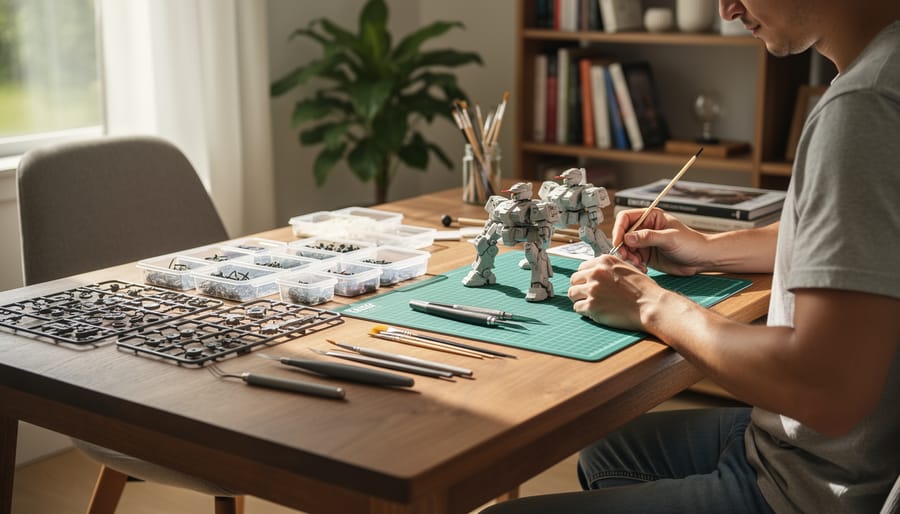
Choosing the right model building kit starts with honest self-assessment. If you’re new to the hobby, don’t reach for a 2,000-piece battleship just because it looks impressive on the box. The most satisfying first build comes from matching the kit’s demands to your current skills, available time, and actual interest in the subject matter.
Material quality shapes your entire experience. Cheaper kits often feature warped pieces that won’t fit flush, brittle plastic that snaps during assembly, or instructions so vague you’ll spend more time guessing than building. Look for established manufacturers with clear photos showing piece fit and detail accuracy. Wood kits should have clean laser cuts without char marks. Metal sheets should be thick enough to hold their shape without constant bending. Plastic sprues should have minimal flash and well-defined part numbers.
Complexity level gets labeled differently across brands, but most use beginner, intermediate, and advanced ratings. Piece count tells part of the story, but assembly method matters more. Snap-fit kits need no glue and forgive alignment errors. Glued plastic kits demand patience while joints set. Wooden models with tab-and-slot construction move quickly but require gentle handling until fully assembled. Metal kits often need needle-nose pliers and a steady hand for tiny tabs.
Build time estimates on boxes assume you’ve built similar kits before and work without interruptions. Double those estimates for your first attempt. A kit marketed as a “weekend project” might span three weekends once you account for organizing pieces, re-reading steps, and letting glue cure properly between stages.
Tool requirements range from “nothing needed” for simple snap-fit models to a dedicated workspace with cutting mats, hobby knives, files, tweezers, multiple glue types, and paint. Before buying an intermediate plastic aircraft kit, confirm you either own or will purchase sprue cutters, liquid cement for plastics, and fine-grit sandpaper. Don’t assume household scissors and school glue will work.
Detail level affects both building challenge and display impact. Highly detailed kits with panel lines, rivets, and intricate cockpit interiors reward careful assembly but punish rushing. Simpler models with clean lines and larger pieces build faster and still look striking on a shelf, especially from normal viewing distance.
Types of Model Building Kits: Material and Style Comparison
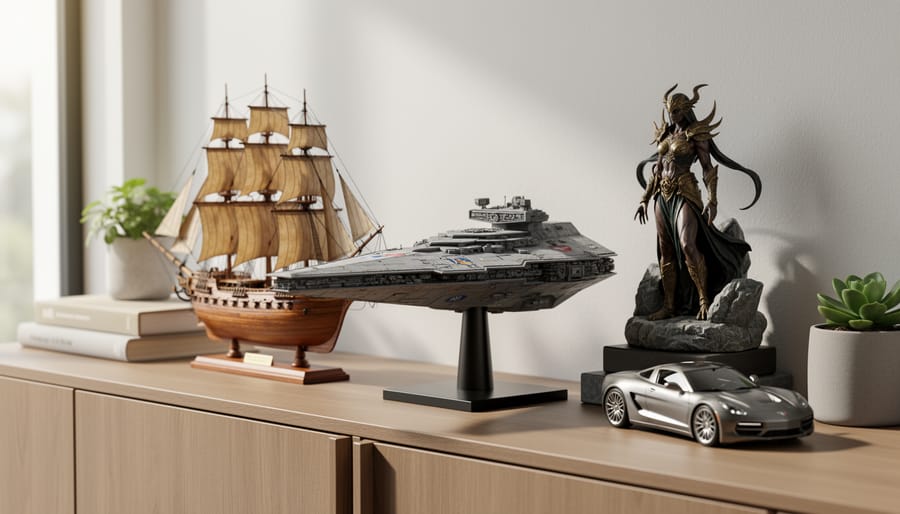
Wood Model Kits
Laser-cut wooden kits have become a standout choice for adults new to model building, and it’s easy to see why. The precision cutting means pieces snap or slot together without glue in most cases, removing one of the biggest sources of frustration for beginners. You won’t need to worry about messy adhesives, drying times, or misaligned parts that are permanently stuck.
The material itself brings a warm, natural aesthetic that fits beautifully into modern home interiors. Finished wooden models display particularly well on bookshelves, mantels, or desks, where they read as sculptural objects rather than toys. The grain and texture add visual interest even in neutral color schemes, making them conversation pieces that complement rather than clash with your existing decor.
What makes wood kits especially beginner-friendly is their forgiving nature. If you make a mistake during assembly, pieces can usually be gently separated and repositioned without damage. The tactile quality of working with wood feels satisfying and grounding, more like furniture assembly than traditional hobby modeling. Most kits include clear numbered pieces and step-by-step instructions, so you can complete impressive-looking builds in a few focused sessions without prior experience.
Metal Model Kits
Metal model kits deliver a satisfying weight and industrial authenticity that set them apart from other materials. These kits excel at vehicle replicas, classic cars, motorcycles, military tanks, where the metal construction mirrors the original subject’s sturdy presence. The finished models have a cold-touch realism that plastic simply can’t replicate, making them particularly striking when displayed on open shelving or desk surfaces.
Most metal kits use pre-cut steel or aluminum sheets that you pop out and fold into three-dimensional forms, often connecting with small tabs that slot together. This construction method means you’re working with your hands in a tactile, almost sculptural way, bending and shaping metal rather than gluing static pieces. The process feels more like precision origami than traditional model assembly.
The aesthetic payoff is substantial. Metal models catch and reflect light differently throughout the day, creating visual interest that changes with your room’s lighting. Their industrial finish, often raw steel, brass, or copper tones, fits naturally into contemporary interiors, especially spaces with exposed brick, concrete accents, or mid-century modern furniture. A completed metal motorcycle or vintage car becomes a functional art piece that bridges hobby and decor without feeling overly decorative or childish.
Plastic Model Kits
Plastic model kits reign as the most versatile option for adult builders seeking intricate detail and ambitious projects. Made from ABS or PVC, these kits allow manufacturers to achieve exceptional engraving precision that captures fine textures, panel lines, and surface details impossible in other materials. You’ll find plastic dominates categories like military vehicles, sci-fi figures, and anime characters where tiny mechanical components and articulated joints matter.
The real advantage lies in articulation possibilities. Many plastic kits feature movable parts, rotating turrets, poseable limbs, opening hatches, that let you customize your display. This flexibility makes them perfect for dioramas or dynamic poses that bring models to life on a shelf.
Plastic kits do require more hands-on work than wood or metal alternatives. You’ll typically need plastic cement for bonding, paint for finishing, and patience for sanding seam lines. Brands like Tamiya, Revell, and Hasegawa have refined plastic molding to the point where parts snap together with satisfying precision, though the painting and weathering stages separate casual builds from showpiece results. If you’re drawn to recreating specific historical subjects or beloved fictional designs with accuracy down to the rivet, plastic delivers that level of fidelity.
Popular Model Categories and Kit Recommendations
Model Ships
Ship models hold a special appeal for adult builders, combining maritime history with the patience and precision that make the hobby rewarding. The Revell Titanic kit is a classic entry point, offering recognizable subject matter and a manageable build for newcomers to plastic models. For those seeking more detail, Tamiya’s USS Enterprise delivers exceptional engraving and a larger scale that showcases carrier deck complexity. The Hasegawa IJN Battleship Yamato is often considered the pinnacle of ship modeling, with intricate deck fittings and turret details that demand careful assembly.
Once finished, these models become striking focal points in home offices or libraries. A completed ship on a dedicated shelf or in a glass display case adds gravitas and a conversation-starter quality that few other decor pieces can match. The horizontal scale of ship models makes them ideal for wide bookshelves or credenzas, where they can anchor a room without overwhelming it. If you prefer automotive subjects, our model car kit guide covers similar display principles for vehicle kits.
Model Aircraft
Aircraft models bring together mechanical precision and historical significance in ways that resonate with both aviation enthusiasts and anyone who appreciates mid-century design. The Tamiya P-51D Mustang captures the sleek lines of World War II’s most celebrated fighter plane, while Revell’s F-14 Tomcat delivers the swept-wing drama of Top Gun-era naval aviation. For a classic British warbird, Airfix’s Supermarine Spitfire offers the iconic elliptical wings that defined the Battle of Britain.
These plastic kits reward patience with sharp panel lines and authentic cockpit details that look impressive under natural light. Display them on floating shelves in a home office or study where the profile view shows off their distinctive silhouettes. Many builders mount them at eye level against a neutral wall, creating a gallery effect that turns technical craftsmanship into a conversation starter. The smaller 1/72 scale versions work well in groupings, while 1/48 scale kits command attention as solo statement pieces that blend nostalgia with serious modeling skill.
Model Trains
Model trains occupy a unique space in adult model building because they combine static construction with operational display. Unlike ship or aircraft models that sit finished on a shelf, train sets become working layouts you can expand over time. The three starter sets mentioned earlier represent different scales and philosophies, each suited to different space constraints and aesthetic preferences.
The Bachmann Digital Commander set runs on HO scale, the most popular size for home layouts because it balances detail with manageable space requirements. A basic oval track fits on a 4-by-8-foot board, making it realistic for apartments or spare rooms. The Kato N Scale set shrinks everything by nearly half, letting you create more elaborate track configurations in tight quarters while maintaining impressive detail on the locomotives and rolling stock. The Lionel Pennsylvania Flyer uses O-Gauge, the largest of these three, which delivers commanding presence and easier handling but demands serious floor or table space for even simple loops.
All three sets arrive ready to run, meaning you’ll be operating trains within minutes of opening the box. The real building begins when you add scenery, structures, and additional track sections to create a custom layout that reflects your vision. This gradual expansion makes train modeling particularly satisfying for adults who want a hobby that grows with their interest rather than ending when assembly finishes.
Common Mistakes to Avoid When Buying Your First Kit
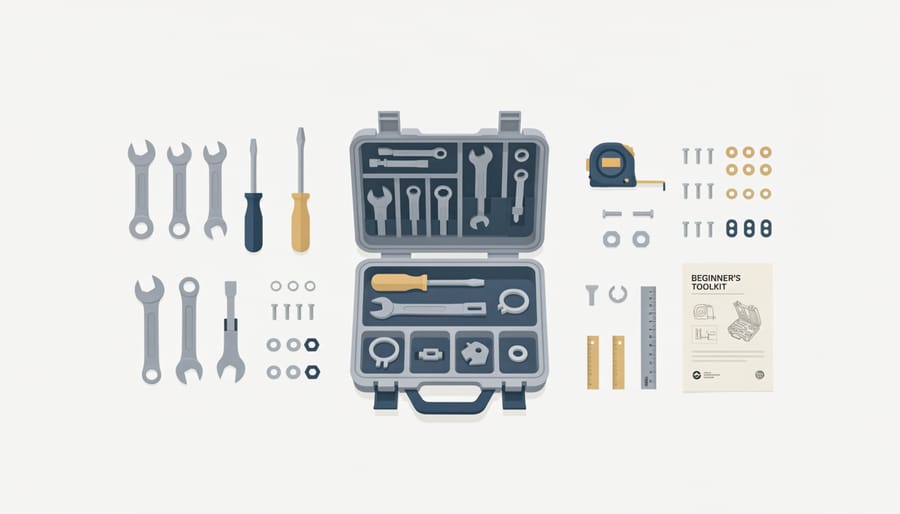
Starting with the wrong kit can turn an exciting new hobby into a frustrating experience before you’ve even opened the box. The most common mistake beginners make is choosing a model based purely on personal interest without checking the skill level recommendation. That 1:350 scale Battleship Yamato might look stunning on the shelf, but if it’s labeled as intermediate or advanced and you’ve never assembled a model before, you’ll likely face hours of confusion over tiny parts and complex assembly sequences.
Underestimating tool requirements ranks as the second major pitfall. Many first-time buyers assume everything they need comes in the box, only to discover they need hobby knives, tweezers, sandpaper, paints, brushes, or specialized glue. Wooden laser-cut kits generally require the fewest additional tools since they snap together without adhesive, making them forgiving for newcomers. Metal and plastic kits, however, often demand a basic toolkit investment before you can start building. Check the kit description carefully for what’s included and what you’ll need to source separately.
Display space deserves serious consideration before you commit to a purchase. A 1:200 scale Titanic measures over three feet long when completed, and train sets require dedicated surface area for layouts and operation. Walk through your home and identify where the finished model will actually live. That gorgeous aircraft carrier won’t feel like an accomplishment if it ends up shoved in a closet because you didn’t plan for its footprint.
Finally, resist the urge to buy multiple kits at once when you’re just starting out. Complete your first model from start to finish, learning what you enjoy and what challenges you, before expanding your collection. This approach prevents accumulating a backlog of unopened boxes and helps you refine what categories, materials, and complexity levels suit your interests and living space.
Displaying Your Finished Models in Your Home
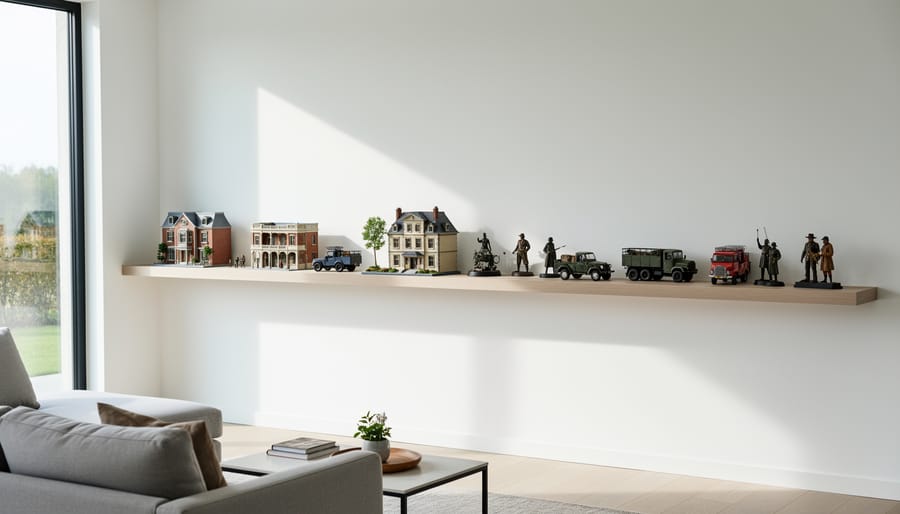
Your finished model deserves more than a dusty shelf in the garage. With the right placement and lighting, these kits become genuine design features that showcase your craftsmanship and add personality to your rooms.
Start with dedicated display space rather than squeezing models between existing clutter. Floating shelves work beautifully for smaller ships and aircraft, creating visual interest at eye level without monopolizing floor space. In a book lover’s living room a detailed sailing ship can anchor a shelf arrangement alongside favorite reads, telling a story about your interests. Metal vehicle models fit naturally in an industrial living room their metallic finish complementing exposed brick and steel accents.
Lighting transforms a hobby project into a showpiece. Position models near natural light sources but avoid direct sunlight, which fades paint over time. For evening display, use adjustable spotlights or LED strip lighting beneath shelves to highlight details and cast dramatic shadows. Apply the same principles from lighting layout tips you’d use elsewhere: layer ambient and accent light to draw the eye where you want it.
Glass display cases protect intricate builds from dust while maintaining visibility. Ikea’s Detolf cabinet has become a hobbyist favorite for this reason, offering four shelves and 360-degree viewing. For larger models like train sets, consider a dedicated display table with a glass top that doubles as functional furniture.
Group models thematically rather than scattering them. A collection of WWII aircraft tells a stronger visual story than random pieces spread across multiple rooms. This intentional curation makes your display feel like gallery-worthy wall art ideas rather than accumulated clutter.
Main Options Compared
When choosing an adult model building kit, your decision comes down to three material types, each offering a distinct building experience and finished look.
Wood kits deliver warmth and natural beauty. Laser-cut for precision, they typically snap together without glue, making them accessible for beginners. The finished pieces work beautifully in libraries, home offices, or on bookshelves where their organic texture complements surrounding decor.
Metal kits provide industrial elegance and exceptional durability. Perfect for vehicle replicas, they offer sturdy construction and striking realism that catches light dramatically. Display these on dark shelves or against minimalist backgrounds to highlight their metallic finish.
Plastic kits remain the gold standard for detail enthusiasts. ABS and PVC plastic allows exceptional engraving detail, movable joints, and the most ambitious builds available. These kits reward patience with museum-quality results, ideal for dedicated display cases or illuminated shelving where intricate work can be appreciated up close.
Your choice depends on your skill level, available build time, and where the finished piece will live in your home. Beginners often find success with wood, while experienced builders gravitate toward plastic for its detail potential.
Frequently Asked Questions
Do I need previous experience to start model building?
No prior experience is necessary, especially with beginner-friendly wood or snap-fit kits. Many laser-cut wooden models require no glue and come with step-by-step instructions that walk you through the entire process. Start with a kit rated for beginners and you’ll develop skills naturally as you build.
How long does a typical kit take to complete?
Build times vary widely depending on kit complexity and your pace. Simple wooden models might take 2-4 hours, while detailed plastic kits like the Tamiya P-51D Mustang can require 10-20 hours spread over several sessions. Most builders work on their projects in 30-60 minute increments rather than marathon sessions.
What tools do I need to get started?
Basic kits often need nothing more than what’s included in the box. For plastic models, you’ll want a hobby knife, sandpaper, tweezers, and plastic cement. Metal kits may require small pliers and files. Wood kits typically need just your hands, though fine sandpaper helps smooth edges.
Are model kits effective for stress relief?
Many adults find model building deeply calming because it requires focused attention on the present task, similar to meditation. The repetitive precision work quiets mental chatter, and the tangible progress provides a sense of accomplishment that counters the abstract nature of much modern work.
Beyond these basics, workspace requirements are simpler than you might expect. A well-lit corner of a dining table works fine for most kits, though you’ll want a dedicated spot if you’re building something large like the Revell Titanic. Protect your surface with a cutting mat or old magazine, and keep parts organized in small containers or ice cube trays to avoid losing tiny pieces.
Model kits make thoughtful gifts because they combine creativity with tangible results. Consider the recipient’s interests when choosing: history buffs often appreciate ship or aircraft replicas, while those drawn to mechanical objects might prefer train sets like the Bachmann Digital Commander or detailed vehicle models. Wood kits offer the safest bet for gift-giving since they’re accessible and create attractive display pieces without requiring specialized tools or painting skills.
Model building isn’t just about the finished piece sitting on your shelf. It’s about the hours you spend immersed in something creative, away from screens and stress. Each section you assemble, each detail you refine, becomes a small meditation. The kit you choose becomes a companion through quiet evenings, a project that unfolds at your own pace.
Start with something that genuinely interests you. If maritime history speaks to you, a ship model will keep you engaged through the build. If you’ve always loved vintage aircraft, that’s your entry point. Match the kit to your current skill level rather than your ambitions. A successful first build beats an abandoned frustrating one every time.
Your completed model tells a story, not just of what it represents but of the time and care you invested. Whether it’s a wooden mechanical kit on your desk or a detailed aircraft in a display case, it reflects your patience and creativity. These aren’t toys. They’re personal achievements that happen to make excellent conversation pieces.
The journey matters as much as the destination. Pick your first kit, clear some workspace, and start building.