
Model car building kits for adults offer three main paths: traditional plastic models requiring paint and glue (starting around $40, $75), brick-based sets like LEGO Technic (climbing to $289 for premium builds), and wooden or metal kits that lean vintage. Each type delivers a satisfying hands-on project that doubles as display-worthy décor for shelves, desks, or creative workspaces. The choice depends on your patience level, budget, and whether you prefer meticulous paint detailing or snap-together convenience.
Why the sudden surge in adult model building? Screens dominate our downtime, and many people crave tactile projects that quiet the mind while producing something tangible. Building a 1:10 scale racing car or a detailed F1 replica taps into childhood nostalgia while offering the precision and complexity that adults appreciate. The finished model becomes a conversation piece, a small triumph sitting proudly on a bookshelf or mantel, reminding you that creativity doesn’t require a full art studio or expensive tools.
Retailers like Walmart and Temu now stock a wide range of kits from trusted brands such as Revell, Tamiya, AMT, and MPC, making it easier than ever to find exactly the right challenge. Whether you’re drawn to classic muscle cars, modern supercars, or Formula 1 racers, the 2026 market delivers options at every skill level and price point. This guide will walk you through the types available, what to prioritize when choosing your first (or next) kit, where beginners often stumble, and which models deliver the best value for your time and money.
What Makes a Quality Model Car Kit Worth Your Time
A quality model car kit should match your skill level and deliver a finished piece you’ll be proud to display. The difference between a rewarding build and a dusty box of frustration often comes down to understanding what you’re signing up for before you buy.
Material Quality Sets the Foundation
The building material shapes your entire experience. Traditional plastic kits from brands like Revell, AMT, and Tamiya offer incredible detail but require gluing, painting, and patience. These kits reward precision with museum-quality replicas that capture every curve and panel line of the original vehicle.
Building block sets, think LEGO Technic or alternatives like QOQ, snap together without glue or paint. They’re forgiving for beginners and surprisingly sophisticated for display. The LEGO Technic Mercedes-AMG F1 W14, for instance, commands serious shelf presence despite its toy-brand origins. Metal kits exist too, though they’re rarer and typically demand advanced skills with specialized tools.
Scale and Display Considerations Matter More Than You’d Think
Scale determines both the building experience and where your finished model lives. A 1:24 scale kit fits comfortably on a bookshelf. A 1:10 scale racing car, like the QOQ DIY sets available at major retailers, becomes a statement piece that needs dedicated display space. Measure your intended spot before buying. A stunning build crammed into a too-small shelf loses its impact, while a tiny model on a vast mantle looks lost.
Brand Reputation and Skill Level Alignment
Established brands like Tamiya and Revell grade their kits by difficulty, usually marked on the box. Trust these ratings. A Level 1 or 2 kit means straightforward assembly with fewer parts. Level 4 or 5 kits assume you know techniques like dry-fitting, seam filling, and custom painting. Starting with a complex kit to build your dream car sounds appealing until you’re three frustrated hours in with backwards decals and visible glue marks.
Check what’s included versus what you’ll need to buy separately. Some kits come with everything; others assume you own paint, brushes, cement, and cutting tools. Factor those costs into your budget and timeline. A $40 kit that needs $60 in supplies isn’t the bargain it appears.
The best kit for you balances ambition with reality. Choose something that stretches your skills slightly without overwhelming them, uses materials you’re equipped to handle, and produces a finished model that earns its place in your home.
Types of Model Car Kits Compared
Traditional Scale Model Kits
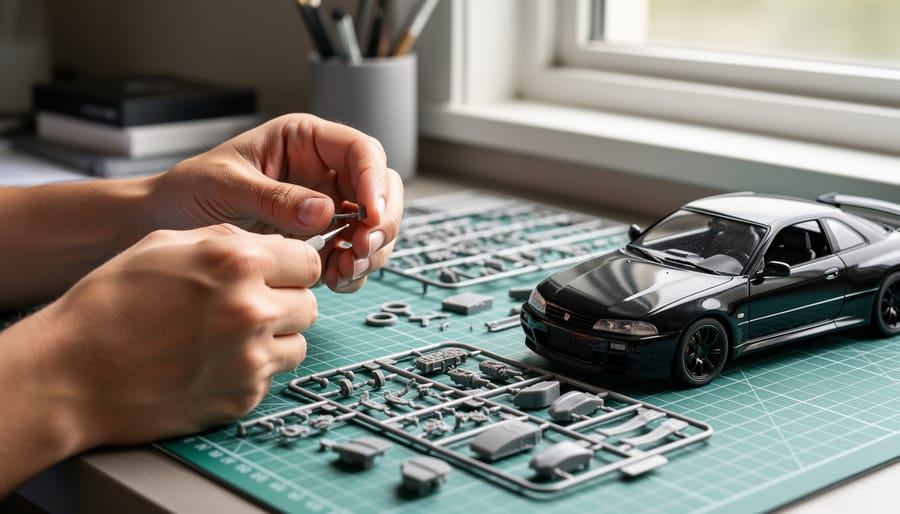
Traditional scale model kits represent the classic approach to model car building, demanding patience and precision but rewarding you with museum-quality replicas. Brands like AMT, Revell, MPC, and Tamiya dominate this category, offering everything from vintage muscle cars to modern supercars in exacting detail.
Scale matters here. A 1:24 scale kit produces a model roughly 7-8 inches long, perfect for shelf display without overwhelming your space. Step up to 1:18, and you’re looking at a 10-12 inch centerpiece with room for incredible engine and interior details. Smaller 1:32 or 1:43 scales suit collectors building themed garages within limited square footage.
These kits aren’t snap-together projects. You’ll need plastic cement to bond hundreds of tiny parts, plus paint to achieve authentic finishes. Some pieces are smaller than a fingernail. The assembly process can stretch across evenings or weekends, depending on complexity and your skill level.
That effort pays off. Traditional kits capture chrome trim, dashboard gauges, and suspension components with a realism that building blocks can’t match. If you’ve built models before or you’re willing to invest time learning techniques like sanding seams and applying decals, these kits deliver heirloom-quality results. Beginners might find the learning curve steep, but experienced hobbyists consider them the gold standard for authentic automotive replicas.
Building Block Sets
Building block sets offer a refreshing alternative to traditional model kits, eliminating the mess of glue and paint while delivering impressive display pieces. LEGO Technic leads this category with sets like the Mercedes-AMG F1 W14 E Performance, a premium option at $289.00 CAD from Walmart Canada that combines engineering complexity with snap-together convenience. The finished model captures authentic racing details without requiring brush skills or ventilation.
Alternative brands like QOQ provide budget-friendly entry points into this building style. Their 1:10 scale racing car sets start at $40.99 CAD, while super sports car models begin around $42.99 CAD, making them accessible for adults testing the hobby. These sets use interlocking blocks similar to LEGO’s system, creating sturdy models that sit beautifully on shelves or desks.
The appeal lies in the building experience itself. You can pause mid-project without worrying about partially dried glue, and mistakes simply snap apart for correction. Finished models maintain a playful aesthetic that works in home offices, media rooms, or casual display areas. They feel less precious than painted replicas, which means you can actually enjoy them rather than worrying about dust settling on meticulously airbrushed panels. For adults seeking creative relaxation without the commitment to painting techniques, building block sets deliver immediate satisfaction.
Formula Racing and Specialty Kits
Formula racing kits occupy a unique space in the hobby, appealing directly to motorsport enthusiasts who want to display their passion. These sets combine technical detail with racing heritage, turning iconic machines into shelf-worthy tributes. Unlike generic car models, Formula 1 kits capture specific championship seasons and team liveries that fans recognize instantly.
The Formula 1 RB19 model kit, currently available at for $73.04, exemplifies this category’s appeal. It recreates a recent championship contender with team branding and aerodynamic details that spark conversations among guests who follow the sport. These specialty kits typically require intermediate building skills but reward you with a display piece that signals your interests more distinctly than generic vehicles.
Beyond open-wheel racing, specialty kits span vintage Le Mans prototypes, rally legends, and touring car icons. They let you curate a collection around a specific racing era or championship rather than assembling random vehicles. If your home office or entertainment space already reflects motorsport interests through posters or memorabilia, a well-executed racing kit becomes the centerpiece that ties the theme together. The specificity matters: these aren’t just model cars, they’re replicas of machines with stories, making them natural conversation starters when displayed prominently.
Our Top Recommendations for Different Budgets and Skill Levels
Finding the right model car kit means balancing your budget with your skill level and the type of building experience you want. Based on verified 2026 availability at Canadian retailers, here’s how to choose wisely across different price points.
For Budgets Under $50
If you’re testing the waters or want a satisfying weekend project without significant investment, building block sets offer excellent value. The QOQ 1:10 Scale DIY Racing Car Building Blocks set, available at Walmart Canada for $40.99, gives you a substantial build with no painting or gluing required. Another option in this range is the QOQ Super Sports Car Building Blocks Set at $42.99, which delivers a display-worthy model through snap-together construction.
These entry-level kits work perfectly for beginners because mistakes are easily reversible, you can simply take apart a section and rebuild it. They’re also ideal if you’re unsure whether the hobby will stick, as the lower price point means less risk if model building doesn’t become a long-term passion.
Mid-Range Options ($50-$100)
This sweet spot offers more detailed models with greater building complexity. The Formula 1 RB19 Model Kit, currently priced at $73.04 (reduced from $97.97) at Walmart, represents solid value for motorsport enthusiasts who want a recognizable, conversation-starting display piece.
At this price tier, you’ll find kits from established brands like AMT, Revell, MPC, and Tamiya available through Walmart Canada. These traditional scale models typically require painting and gluing, making them better suited for intermediate builders who’ve completed at least one or two simpler projects. The trade-off for the extra effort is exceptional realism and detail that cheaper kits can’t match.
Premium Builds ($100+)
For serious hobbyists or collectors who want showcase-quality results, the LEGO Technic Mercedes-AMG F1 W14 E Performance Race Car Building Set at $289.00 represents the high end of the market. This scale model combines LEGO’s engineering precision with Formula 1 authenticity, creating a display piece that commands attention in any room.
Premium kits justify their cost through superior part quality, innovative building techniques, and brand licensing that ensures accurate replicas. They’re best reserved for experienced builders or those committed to making model building a central hobby rather than an occasional pastime.
Start where your confidence and budget align, then work your way up as your skills develop.
Common Mistakes to Avoid When Buying Your First Kit
The biggest mistake first-time builders make is picking a kit that looks amazing on the shelf but demands far more skill and patience than they actually have. Those highly detailed, 200-piece classic car replicas with working suspensions? They’re designed for experienced hobbyists who already know how to sand seams, mix custom paint, and troubleshoot tiny decals. If you’ve never built a model before, starting with an advanced-level kit almost guarantees you’ll end up with a half-finished project gathering dust in your closet.
Another common trap is ignoring what the finished model will actually look like in your space. You fall in love with a 1:10 scale Formula 1 car online, only to discover it’s nearly two feet long when it arrives. Suddenly, you don’t have shelf space for it, and it ends up crammed into a corner instead of displayed proudly. Always check the assembled dimensions before buying, and measure your intended display area. A stunning model loses its impact when it’s shoved somewhere awkward because you didn’t plan ahead.
Many beginners also choose kits based purely on box art or brand recognition without reading what’s included. Some kits come as bare plastic requiring extensive painting and assembly, while others (like building block sets) snap together in full colour with zero additional supplies needed. If you’re expecting a relaxing afternoon project and open a kit that demands an airbrush and fifteen shades of metallic paint, you’re setting yourself up for disappointment. Read product descriptions carefully, check verified 2026 retailer listings to understand exactly what you’re getting, and match the kit type to both your skill level and how much time you genuinely want to invest.
Where Model Car Building Fits Into Your Home Design
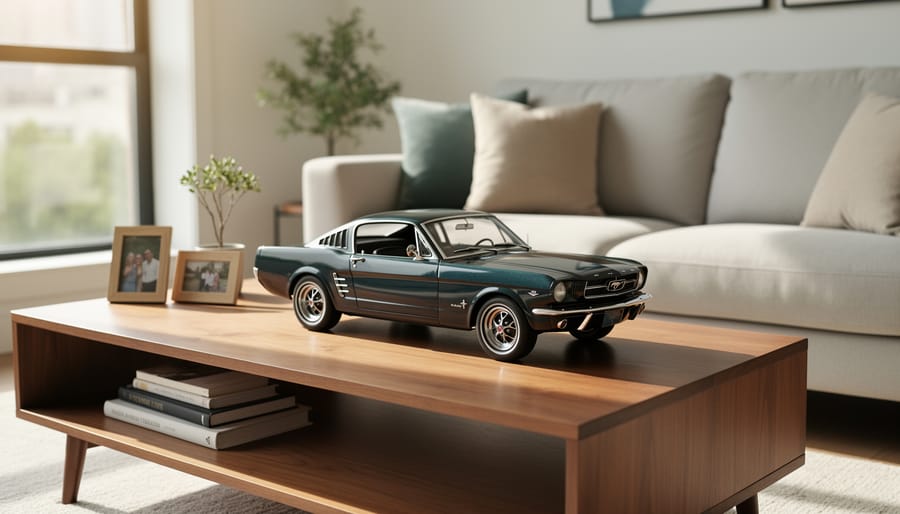
Your completed model cars deserve more than a dusty shelf in the garage. They’re handcrafted pieces that tell a story about your interests and patience, and they can become striking focal points in your home when displayed thoughtfully.
A dedicated display area transforms your models from hobby projects into conversation starters. Floating shelves in a home office create a gallery effect, especially when you group cars by era or manufacturer. Glass-fronted cabinets protect your work from dust while keeping them visible, and they work beautifully in industrial living room styles where metal and precision details complement exposed materials.
Lighting makes the difference between “nice collection” and “wow” moment. LED strip lights mounted above shelves highlight the curves and details you spent hours perfecting. Small spotlights can create dramatic shadows that emphasize scale and craftsmanship. Consider borrowing from lighting ideas used in kitchens, where task lighting showcases specific features.
Think beyond traditional shelving. A shallow shadow box turns a single prized model into three-dimensional wall art ideas while a vintage toolbox repurposed as a display case adds industrial charm. Acrylic risers create depth in bookcase displays, preventing models from visually competing with each other.
The key is treating your models as design elements, not just collectibles. Match display materials to your existing decor, sleek acrylic for modern spaces, reclaimed wood for farmhouse aesthetics, or black metal frames for contemporary rooms. Your personalized living room should reflect what you love, and a well-curated model car display does exactly that while adding unexpected visual interest to spaces that often feel overly polished or generic.
Frequently Asked Questions
Model car building offers a rewarding creative outlet, but newcomers often have similar questions before diving in. Here are the answers to help you get started with confidence.
Do I need special tools to build model car kits?
Traditional plastic kits typically require hobby knives, plastic cement, tweezers, and paint supplies, while building block sets like LEGO Technic need no additional tools, everything snaps together out of the box. Your choice between these types largely determines your upfront investment in supplies.
How long does a typical build take?
Build times vary dramatically by kit complexity and your experience level. Simple building block sets might take 2-4 hours, while detailed scale models can require 10-20 hours spread across several sessions, especially if you’re painting and weathering for realistic effects.
Can complete beginners start with any kit?
No, starting with an advanced kit leads to frustration and disappointing results. Look for kits explicitly marked “beginner” or “skill level 1,” or consider building block sets that eliminate the painting and gluing learning curve entirely.
Where can I buy model car kits in Canada in 2026?
Major retailers like Walmart Canada and Temu Canada stock a range of kits, from budget-friendly building block sets starting around $41 to premium LEGO Technic models priced at $289. Online shopping gives you the widest selection and price comparison options.
Are building block sets as satisfying as traditional models?
Building block kits offer a different but equally engaging experience, they’re faster to complete, require zero additional supplies, and create impressively detailed display pieces without the learning curve of painting and gluing. Many adults find them more approachable while still delivering that rewarding sense of creating something tangible with their hands.
The beauty of this hobby is that you can start simple and gradually tackle more complex projects as your skills and confidence grow. Whether you’re drawn to snap-together ease or the meditative precision of traditional model building, there’s a kit that matches both your current ability and the time you want to invest.