
A zen modern bathroom blends minimalist design with natural materials and spa-like serenity, creating a calm retreat that feels both contemporary and timeless. This approach strips away clutter and visual noise, replacing it with clean lines, neutral palettes, and thoughtful details that turn your daily routine into a moment of tranquility.
If your bathroom feels chaotic or outdated, adopting this aesthetic doesn’t require a complete gut renovation or a designer budget. The style centers on simplicity and intention. Think smooth stone vessels, warm wood accents, soft lighting, and purposeful negative space. Every element earns its place, from the bathtub you choose to the way you store your towels.
The bathtub often anchors a zen modern bathroom. Freestanding soaking tubs in matte white or natural stone finishes set the tone for relaxation, while understated drop-in designs work beautifully in smaller spaces. Your choice shapes not just how the room looks, but how it feels when you step inside after a long day.
This article walks you through what defines zen modern design, how the principles actually work in a real bathroom, and which elements make the biggest impact. You’ll find bathtub recommendations across different price points, styling strategies for tight spaces, and ways to personalize the look without losing the calm. Whether you’re starting from scratch or refreshing what you already have, you’ll leave with a clear plan to create a bathroom that genuinely helps you unwind.
What Zen Modern Actually Means in Bathroom Design
Zen modern bathroom design pulls together two powerful ideas: the calm, nature-rooted simplicity of Japanese zen philosophy and the sleek, functional lines of contemporary minimalism. It’s not about copying a traditional Japanese bathhouse or stripping your bathroom down to bare walls. Instead, it’s a thoughtful middle ground where clean geometry meets organic warmth, where every element serves a purpose and nothing feels excessive.
At its heart, zen modern asks you to design with intention. Each piece in the space, the bathtub, the lighting, the materials, should contribute to a sense of peace without shouting for attention. You choose natural textures like wood and stone, favor muted earth tones over bold colors, and leave breathing room instead of filling every surface. The result feels open, grounded, and quietly luxurious.
- Zen design principles
- A Japanese-inspired approach emphasizing simplicity, balance, and harmony with nature to create calm, uncluttered spaces.
- Modern minimalism
- A contemporary style focused on clean lines, functional forms, and removing excess to highlight essential elements.
- Wabi-sabi
- The Japanese aesthetic of finding beauty in imperfection and natural aging, embracing organic textures and subtle variations.
- Negative space
- The intentional use of empty areas in design to create visual rest, balance, and a sense of openness.
- Natural elements
- Materials and features drawn from nature, wood, stone, water, plants, that bring warmth and organic character into a space.
This approach differs from stark minimalism because it welcomes texture and warmth. A purely minimal bathroom might feel cold or clinical. Zen modern softens that edge with natural wood tones, live plants, and materials that show grain and variation. It also diverges from traditional Japanese bathrooms, which often feature specific cultural elements like hinoki wood soaking tubs or separated wet rooms. Zen modern borrows the philosophy but adapts it to contemporary Western living.
The emotional payoff is real. Walking into a zen modern bathroom feels like stepping away from chaos. The clean surfaces reduce visual noise, the natural materials ground you, and the thoughtful layout invites you to slow down. Functionally, it’s practical too, less clutter means easier cleaning, and durable natural materials age gracefully rather than looking worn.
How the Zen Modern Approach Works in Your Bathroom
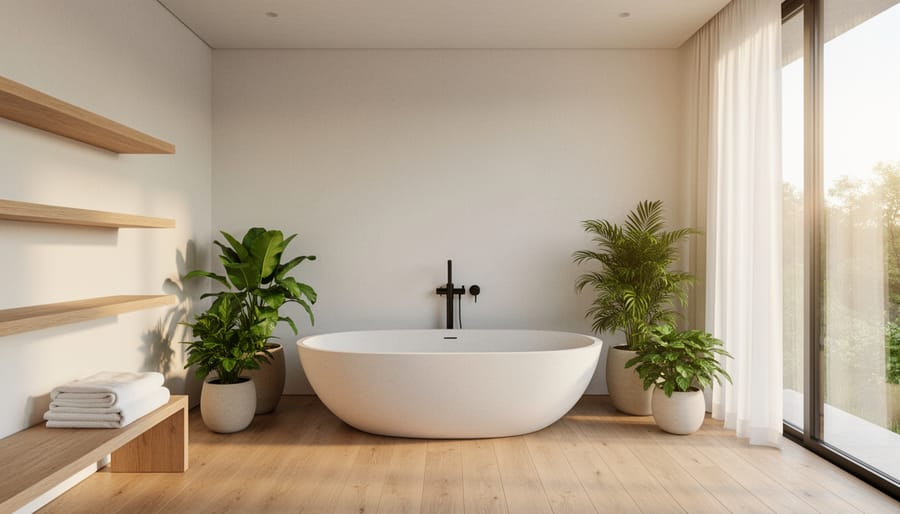
The zen modern approach doesn’t rely on expensive fixtures or perfect symmetry. It works by removing visual noise and anchoring your attention on what matters: water, light, texture, and breathing room. Every element serves a purpose, and nothing competes for your focus.
Start with your bathtub as the emotional center of the space. In a zen modern bathroom, the tub isn’t shoved against a wall or boxed in by tile. It’s positioned where it can breathe, often near a window to catch natural light, or centered in the room as a sculptural focal point. This placement signals that bathing is an experience, not a chore. The tub’s simple, clean lines (think deep soaking tubs or rectangular forms) let the eye rest instead of scanning ornate details.
The palette stays neutral and soft, whites, warm grays, beiges, natural wood tones. These calming colors and natural light work together to lower stress and improve mood, which is exactly what you want when soaking after a long day. Add texture through organic materials: a teak bath mat, a stone countertop, bamboo shelving. These bring warmth without busy patterns.
Decluttering isn’t about deprivation. It’s about editing down to what you actually use and love. Store toiletries in closed cabinets or minimal baskets. Let countertops stay mostly bare. This negative space, the empty areas around your tub, the unbroken wall behind it, gives your mind permission to settle. You’re not scanning surfaces for what needs tidying.
Lighting layers the effect. Maximize daylight if you can, add soft ambient fixtures for evenings, and consider candles for mood. The interplay between these light sources and your neutral palette creates depth and shifting shadows that feel alive, not sterile. When everything works together, the bathroom becomes a retreat where intentionality replaces chaos.
Essential Elements of Zen Modern Bathtub Design
Bathtub Styles That Embody Zen Modern
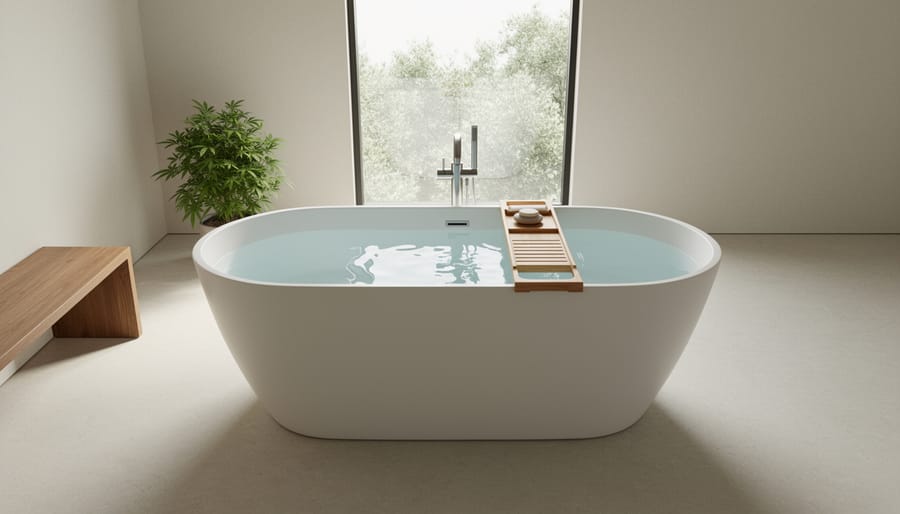
Freestanding soaking tubs lead the zen modern aesthetic because they’re sculptural yet simple, allowing the bathtub itself to become a focal point without overwhelming the space. These tubs typically feature clean lines, a deep basin for full-body immersion, and materials that feel tactile and grounded. You’ll find oval silhouettes softening the room’s geometry or rectangular forms echoing the crisp edges of modern architecture, both work beautifully as long as the design stays unadorned.
Japanese ofuro-inspired tubs bring authentic zen principles into the modern bathroom. These are notably deeper than Western tubs (often allowing you to sit upright with water to your shoulders) and may incorporate natural wood like hinoki cypress or teak. The compact footprint makes them surprisingly practical for smaller spaces, while the vertical depth creates that meditative soak the style is known for.
What separates zen modern from other bathtub aesthetics is restraint. You won’t see clawfoot legs, intricate tile mosaics, or decorative rim details here. Ornate and vintage styles compete for attention, while zen modern designs create visual breathing room. The tub’s silhouette should be intentional but quiet, a smooth matte finish rather than high gloss, integrated overflow rather than exposed hardware, and a shape that feels inevitable rather than fussy.
This simplicity isn’t boring. A well-chosen soaking tub in stone resin or concrete composite has presence through form and texture, not decoration. The goal is a bathtub that invites you to pause, not one that demands you notice its details.
Materials and Finishes
The materials you choose shape both the look and the tactile experience of a zen modern bathroom. Natural stone, marble, granite, travertine, brings organic texture and subtle color variation that feels grounded and timeless. These materials age gracefully and pair beautifully with modern bathtub tile in muted tones, though they require sealing and regular maintenance. For a softer, warmer touch, wood accents around the tub or as shelving introduce warmth without overwhelming the space; teak and cedar handle moisture well.
Matte composites and concrete offer budget-friendly alternatives with a similarly understated aesthetic. These finishes resist fingerprints and water spots, keeping surfaces looking clean with minimal effort. Concrete, whether poured or in tile form, delivers an industrial-meets-organic vibe that anchors the room.
Here are materials that work well in zen modern bathrooms:
- Marble or travertine: elegant, cool to the touch, needs sealing every year or two
- Matte porcelain or composite: affordable, low-maintenance, mimics stone texture
- Teak or cedar accents: warm, moisture-resistant, adds natural contrast
- Polished concrete: durable, modern, budget-conscious for larger surfaces
- River rock or pebble insets: tactile, spa-like underfoot, works as tub surround detail
The key is choosing finishes that feel natural rather than synthetic. Matte over glossy, textured over perfectly smooth, these choices invite you to slow down and notice the space rather than rush through it.
Color Palette and Lighting
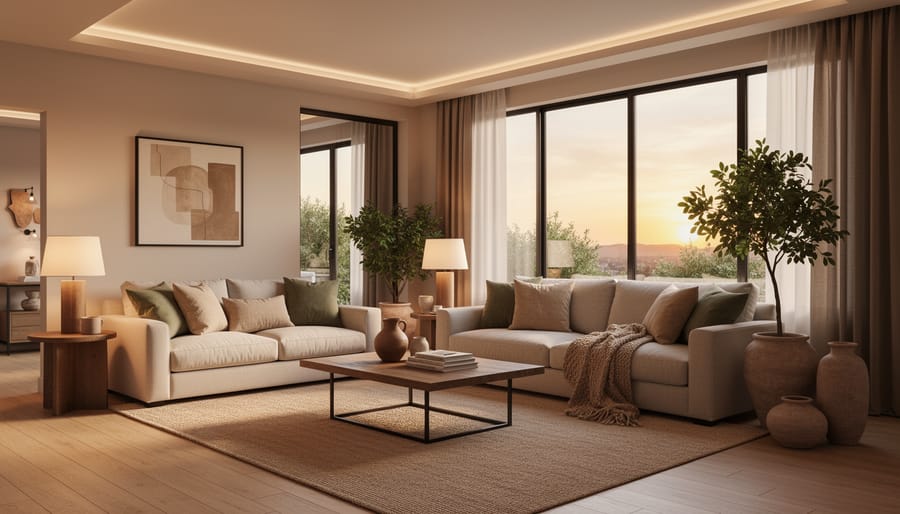
A zen modern bathroom lives in a restrained palette that mimics nature itself. Think soft whites, warm grays, sandy beiges, and the occasional accent of charcoal or taupe. These neutrals form a quiet backdrop that lets the bathtub become the room’s focal point without visual noise competing for attention. Natural wood tones, pale oak, walnut, or teak, add warmth and texture through vanity bases, shelving, or a simple stool beside the tub. A single potted plant or a few eucalyptus stems in a ceramic vase introduces life and oxygen without clutter.
Lighting shapes the mood as much as color does. Prioritize natural light wherever possible: a window near the tub or a skylight overhead floods the space with daylight and connects you to the outdoors. When the sun sets, layered artificial lighting takes over. Install dimmable recessed fixtures or wall sconces with warm bulbs, research shows that warm light improves mood and promotes relaxation. Skip harsh overhead glare. A few candles on the tub ledge or a floating shelf add flickering intimacy and reinforce the spa-like calm that defines the zen modern approach.
Spatial Arrangement and Flow
In zen modern bathrooms, what you leave out matters as much as what you include. The bathtub becomes a natural focal point when surrounded by open floor space and uncluttered surfaces, imagine a freestanding tub positioned near a window with nothing but a simple wooden stool and a rolled towel nearby. This intentional emptiness, sometimes called negative space, allows the eye to rest and creates a sense of spaciousness in interior settings that feels larger than the actual square footage.
For small bathrooms, you don’t need a massive footprint to achieve this flow. Center a compact soaking tub as your visual anchor, then keep counters clear, store toiletries in closed cabinets or simple woven baskets tucked out of sight. Even a modest 5×7 bathroom feels more expansive when you resist the urge to fill every corner with shelves, plants, or decorative objects. The goal is breathing room: enough open surface and floor that your eye can travel uninterrupted from the bathtub to the walls, creating a calm, uncluttered pathway through the space.
Real-Life Ways to Use Zen Modern Bathtub Design in Your Home
You don’t need a full renovation to bring zen modern principles into your bathroom. Start with the area around your existing tub by clearing countertops and switching plastic bottles for glass or ceramic dispensers. A simple wooden stool or bench beside the tub creates a spa-like staging area for towels and candles, instantly shifting the mood without permanent changes.
Renters can make impactful shifts without risking their deposits. Replace your shower curtain with a neutral linen or waffle-weave fabric in white, gray, or warm taupe. Add a bamboo bath mat and swap bright towels for organic cotton in earthy tones. If your bathtub surround feels dated, a tile transformation using peel-and-stick options in matte stone textures can temporarily modernize the space. Layer in a small potted plant on the windowsill or a trailing philodendron hung from a suction hook.
Budget-conscious homeowners have seen dramatic results with selective updates. One family replaced only their bathtub fixtures with matte black hardware, painted walls a soft greige, and installed a $40 bamboo ladder for towel storage. The total spend was under $300, but the visual shift was remarkable. Another apartment dweller added LED strip lighting behind their mirror and swapped all accessories for matching natural wood pieces from a home goods store, creating cohesion for less than $100.
Small bathrooms benefit enormously from zen modern thinking because the style prioritizes breathing room. Remove unnecessary furniture and wall decor. Keep only what you use daily, storing everything else out of sight. A corner-mounted glass shelf holds essentials without visual weight. If your tub shares space with a shower, a frameless glass panel maintains openness better than a curtain.
Here are quick adjustments that deliver immediate impact:
- Swap colorful accessories for neutral ceramic or stone pieces
- Add a wooden stool or teak bath caddy for natural warmth
- Install dimmable lighting or battery-powered LED candles
- Place one or two low-maintenance plants near natural light
- Declutter counters, keeping only daily essentials visible
- Choose plush towels in white, beige, or soft gray
Full remodels offer the chance to integrate zen modern from the ground up. Consider a deep soaking tub positioned near a window, surrounded by large-format porcelain tiles in honed stone textures. Built-in niches eliminate the need for shelving units. Floating vanities enhance the sense of space. One homeowner replaced their standard tub-shower combo with a freestanding oval tub and separate walk-in shower with a pebble floor, transforming a dated bathroom into a personal sanctuary.
The approach scales to any situation. Even teenagers creating their own space, much like personalized teen room ideas can adopt zen principles in a shared bathroom by claiming one shelf, keeping it minimal, and adding a small succulent. The key is intentionality, not square footage or budget size.
Common Questions About Creating a Zen Modern Bathroom
Can I create a zen modern bathroom on a budget?
Absolutely. Start with decluttering, a fresh coat of neutral paint, and swapping out hardware for matte black or brushed nickel finishes. Add natural textures through bamboo accessories, simple plants, or a wooden bath mat instead of replacing your entire tub.
What if my bathtub isn’t freestanding?
Built-in tubs work perfectly in zen modern spaces. Clean up the surround with white or neutral tiles, remove visual clutter like shower curtains (opt for a frameless glass panel if possible), and add a wooden tray or smooth stone soap dish to introduce natural elements.
How do I maintain the uncluttered look with kids?
Use hidden storage, a wall-mounted cabinet with clean lines or woven baskets tucked under the vanity keeps bath toys and products out of sight. Establish a nightly five-minute reset routine where everyone returns items to their designated spots.
Where do I put all my bathroom stuff if everything needs to be minimal?
Zen modern isn’t about owning nothing; it’s about intentional storage. Recessed shelving, floating vanities with drawers, and matching containers keep necessities organized but invisible. Display only what you use daily or what genuinely brings you peace.
Isn’t this style too cold or sterile?
Not when you layer in warmth through natural wood tones, soft textiles like linen towels, and live greenery. The key is balancing clean lines with organic textures, a wooden stool next to the tub or a stone vessel instantly adds soul without sacrificing simplicity.
Can I personalize a zen modern bathroom or does it have to look like a spa?
The beauty of putting yourself design in charge is making it yours. If you love deep navy instead of beige, or want a single piece of art that makes you smile, include it. Zen modern thrives on intentionality, not rigid rules.
These questions come up constantly because people worry zen modern means expensive or impractical. The truth is simpler: this aesthetic works when you strip away what doesn’t serve you and keep what does. That might mean a $15 plant and better lighting rather than a $3,000 tub replacement, and both paths are valid.
Creating a zen modern bathroom isn’t about achieving some magazine-perfect ideal or spending thousands on a complete renovation. It’s about making intentional choices that bring you calm, choices that reflect what peace means to you personally. Maybe that’s a single freestanding tub positioned where morning light falls, or swapping cluttered countertops for one minimalist tray holding your essentials. Perhaps it’s as simple as a fresh coat of warm gray paint and a bamboo bath mat.
The beauty of this interior design revolution is that you’re in charge. Start with what resonates most, a material that feels right under your hand, a color that quiets your mind, a layout adjustment that lets you breathe easier. Your bathroom doesn’t need to look like anyone else’s sanctuary. It just needs to feel like yours.
Modern bathtub design gives you countless ways to anchor that personal retreat, from sleek composites on a budget to sculptural stone pieces that become art. Pick one element, make it count, and let your space evolve from there. The calm you create is worth far more than the price tag attached.