
Modern bathtub tile designs combine clean lines, intentional material choices, and a focus on simplicity to create spa-like bathroom spaces that feel both calming and sophisticated. Unlike traditional styles that often rely on ornate patterns or heavy decorative elements, modern tile design prioritizes visual clarity, whether through large-format tiles that minimize grout lines, geometric patterns that add interest without clutter, or monochromatic color schemes that create a sense of spaciousness.
The shift toward modern aesthetics reflects a broader design movement that values personal expression over prescribed rules. Today’s homeowners want bathrooms that feel custom-tailored to their lifestyles, and modern tile choices put you in charge of creating exactly that atmosphere. You’re no longer limited to matching every element in a pre-determined suite. Instead, you can mix textures like matte subway tiles with glossy accents, pair neutral tones with a single bold color, or choose wood-look porcelain that brings warmth without the maintenance headaches of real wood.
This guide walks you through what defines modern bathtub tile design in practical terms. You’ll discover the key principles that make a tile layout feel contemporary, explore specific style categories that work across different budgets, and learn how real homeowners have transformed their bathtubs using these approaches. Whether you’re planning a full renovation or a weekend refresh, understanding modern tile design helps you make confident choices that turn your bathroom into a space you’ll actually enjoy using every day.
What Modern Bathtub Tile Design Means
Modern bathtub tile design is defined by its departure from formulaic bathroom patterns and beige-everything uniformity. Where traditional tile work relied on predictable 4×4 white squares arranged in perfect grids, modern approaches embrace intentionality and visual impact. It’s about choosing tiles that reflect how you want your bathroom to feel, not just what’s standard.
This shift means three core characteristics now define modern tile design. First, clean lines and streamlined execution, whether you select minimalist subway tiles or bold geometric patterns, the installation is precise, grout lines are consistent, and the overall effect feels deliberate rather than busy. Second, personalization matters more than following prescribed rules. Modern design gives you permission to design in your style choosing colors and patterns that express your taste rather than what traditional bathroom design dictated. Third, material variety has exploded. You’re no longer limited to ceramic squares; modern options include large-format porcelain slabs, textured stone looks, mixed finishes, and innovative shapes that weren’t considered “bathroom appropriate” a decade ago.
What makes a tile design modern isn’t a specific color or pattern, it’s the confidence to make purposeful choices. A monochromatic white scheme can be modern when executed with interesting texture or oversized formats. Bold patterned tiles behind the tub create modern impact through strategic placement rather than covering every surface. The distinction lies in intentionality and moving beyond default choices toward designs that actually transform the space.
How Modern Bathtub Tile Design Works
Creating Visual Harmony
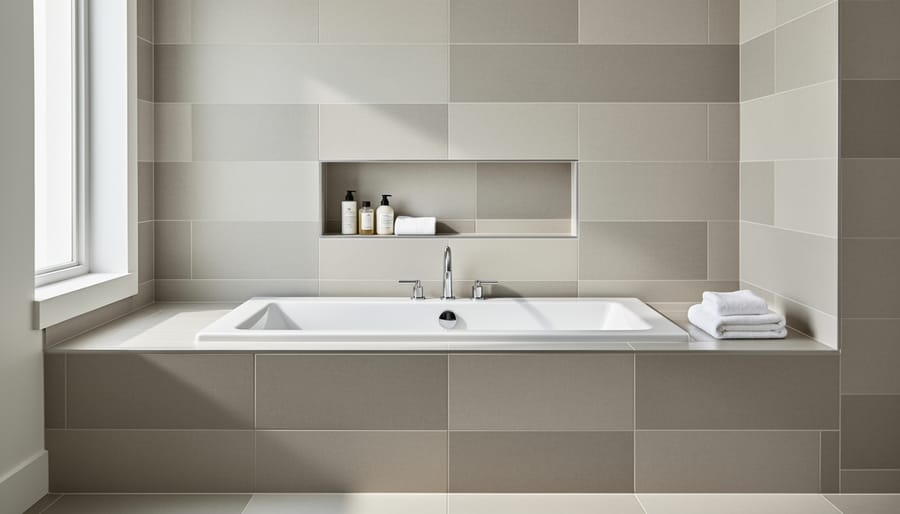
Visual harmony in modern bathtub tile design starts with understanding how your tile choices interact with existing bathroom elements. The tile’s color should either complement or intentionally contrast with your bathtub finish, white subway tiles paired with a matte black tub create crisp definition, while cream travertine alongside a white soaker tub offers softer continuity.
Texture plays an underrated role in cohesion. Glossy tiles reflect light and pair naturally with polished chrome fixtures, making small bathrooms feel brighter. Matte or honed finishes absorb light, creating warmth that works beautifully with brushed nickel or brass hardware and freestanding tubs.
Pattern scale matters too. Large-format tiles with minimal grout lines suit contemporary bathtubs with clean silhouettes, while smaller geometric patterns can balance ornate fixtures without competing. The key is proportion, a massive herringbone pattern overwhelms a compact alcove tub, but the same design might anchor a spacious primary bathroom perfectly.
Consider sightlines from the doorway. Your tile should guide the eye toward the bathtub as a focal point, not distract from it. When color, texture, and pattern all support rather than fight each other, the whole bathroom feels intentionally designed instead of randomly assembled.
Balancing Function and Style
Modern bathtub tile designs work best when they meet real-world performance demands without compromise. Porcelain and ceramic tiles dominate bathroom applications because they satisfy strict water absorption requirements while offering limitless aesthetic options. Porcelain’s denser composition makes it naturally more water-resistant, ideal for areas around tubs that face constant moisture exposure.
Slip resistance matters too. Matte and textured finishes provide better traction on wet floors than glossy tiles, making them smarter choices for tub surrounds and nearby flooring. Many homeowners choose glossy accent tiles for vertical surfaces while keeping floors safer with textured options.
Maintenance shapes long-term satisfaction. Large-format tiles reduce grout lines, meaning fewer places for mold and mildew to establish themselves. Lighter grout colors show dirt faster, while darker grouts hide staining but can make small spaces feel heavier. Sealed natural stone requires periodic resealing to maintain water resistance, while glazed porcelain needs only regular cleaning.
The best modern designs recognize these practical realities from the start, choosing materials and layouts that deliver both beauty and durability for years of daily use.
Types of Modern Bathtub Tile Designs
Minimalist and Monochromatic Approaches
Minimalist and monochromatic tile designs strip away visual clutter to create peaceful, spa-inspired spaces around your bathtub. These approaches rely on single colors or subtle tonal variations to establish calm, cohesive atmospheres that never feel overwhelming.
Classic white subway tiles remain a minimalist favorite, offering clean lines and timeless appeal at accessible price points. Installed in straight stacks rather than traditional brick patterns, they create an even more modern, streamlined effect. Large-format tiles (24×24 inches or bigger) take minimalism further by reducing grout lines and creating seamless expanses that make small bathrooms feel larger.
Monochromatic doesn’t mean boring. You can choose soft grays, warm beiges, or even matte black tiles for dramatic simplicity. The key is maintaining consistency in color family while varying texture or finish. Mix glossy and matte tiles in the same shade, or combine smooth surfaces with subtle linear patterns.
These designs work especially well in compact bathrooms where busy patterns would feel chaotic. They also provide perfect backdrops for statement bathtubs or bold fixtures, letting those elements shine without competing visually.
Geometric and Patterned Tiles
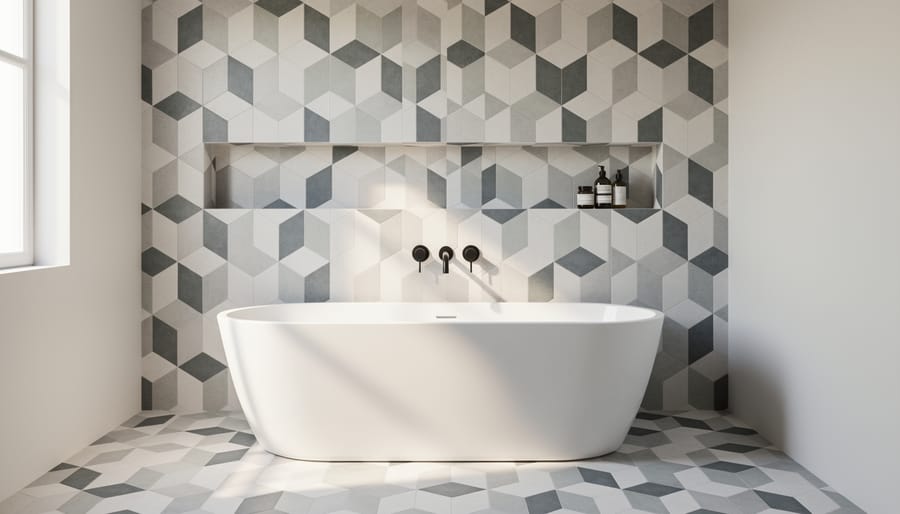
Geometric tiles bring energy and personality to modern bathrooms through intentional pattern and repetition. Hexagons create honeycomb walls that soften hard lines while maintaining clean geometry, they work particularly well in alcove tub surrounds where the repeating six-sided shapes add movement without visual chaos. Chevron and herringbone patterns use rectangular tiles arranged in V-shaped or staggered formations, directing the eye upward or across the wall to make small bathrooms feel larger.
These patterns demand precision during installation, so grout lines stay crisp and angles align properly. Choose one focal wall for your pattern, typically behind the tub, and keep surrounding walls simple to prevent overwhelming the space. Dark grout with white geometric tiles creates bold definition, while matching grout colors produce subtler, more flowing effects.
Scale matters with patterns. Smaller tiles (under three inches) create intricate, almost textile-like surfaces suited to compact spaces, whereas larger geometric formats (eight inches or more) make bolder statements in spacious bathrooms. Mix matte and glossy finishes within the same pattern to add depth without introducing new colors.
Natural Stone and Textured Finishes
Natural stone and textured finishes bring an organic luxury to modern bathtub surrounds that smooth, glossy tiles simply can’t match. Marble remains the classic choice, with its natural veining creating one-of-a-kind patterns that feel both elegant and contemporary. White Carrara adds timeless sophistication, while dramatic black or green marble makes bold statements worthy of designer inspiration. Slate tiles offer rugged texture and earthy tones in charcoal, gray, and rust that ground modern spaces with natural warmth.
For budget-conscious homeowners, porcelain and ceramic stone-look tiles deliver the aesthetic without the price tag or high maintenance. These replicas capture marble’s veining or slate’s rough-hewn texture remarkably well. Textured finishes like honed marble, brushed stone, or three-dimensional relief tiles add tactile depth that invites touch while creating subtle shadow play under bathroom lighting. The key is balancing the stone’s natural irregularity with clean grout lines and simple fixture choices, letting the material’s inherent beauty anchor your modern design.
Mixed Materials and Creative Combinations
Blending different tile materials, sizes, or finishes lets you create a bathroom that feels distinctly yours rather than catalog-standard. You might pair smooth white subway tiles with a strip of textured stone for subtle contrast, or combine large-format porcelain slabs with smaller mosaic accents to define zones around your tub.
Popular combinations include matte and glossy tiles in the same color family, which adds depth without visual chaos. Mixing wood-look planks with classic ceramics brings warmth to minimalist spaces. Some homeowners alternate tile sizes in the same material, think large squares on main walls with tiny hexagons as a tub surround border, to guide the eye and break up expanses.
The key is intentional restraint. Limit yourself to two or three materials maximum, and tie them together through shared color tones or a repeating shape. When done thoughtfully, mixed materials transform generic tile installations into custom designs that reflect your taste without requiring a designer’s budget or perfect execution.
Feature Walls and Accent Areas
A feature wall transforms your bathtub area into a design statement while keeping the rest of the space calm. The most common approach places eye-catching tiles on the wall directly behind the tub, think bold geometric patterns, vibrant colors, or richly veined marble. This creates a natural focal point that draws attention without cluttering the entire bathroom.
You don’t need to cover every surface. Many homeowners tile just the tub surround or extend the accent treatment halfway up one wall, transitioning to paint or neutral tiles above. This partial approach cuts costs while maintaining impact.
Accent areas work especially well when they contrast with surrounding surfaces. A dark patterned tile against white walls creates drama. Textured stone tiles beside smooth subway tiles add depth. The key is choosing a feature that feels intentional, not random, one statement area that anchors the room’s design rather than competing elements fighting for attention.
How Modern Bathtub Tile Designs Are Used in Real Homes
Small Bathroom Solutions
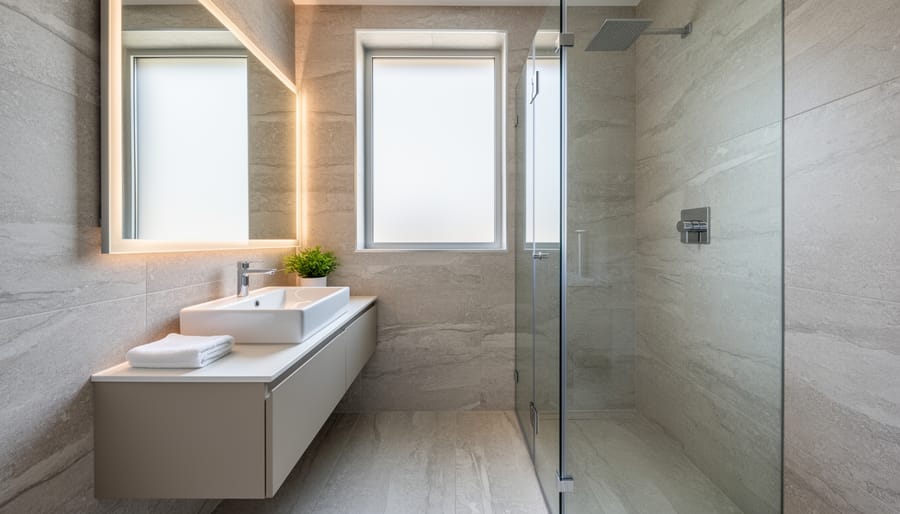
In compact bathrooms, strategic tile choices create the illusion of more space while delivering modern style. Light-colored large-format tiles minimize grout lines and visual interruptions, making small bathrooms feel more open. Vertical subway tile installations draw the eye upward, adding perceived height to cramped spaces. Extending the same tile from floor to ceiling creates seamless continuity that expands spatial boundaries. For alcove tubs, limiting bold patterns to a single accent wall behind the tub adds personality without overwhelming the room. Reflective or glossy finishes bounce light around tight quarters, brightening dark corners. Glass mosaic tiles in narrow niches or along tub ledges introduce texture and interest at a small scale. These techniques align with broader fresh home decor ideas that prioritize smart design over square footage, proving that size constraints needn’t limit modern aesthetic ambitions.
Budget-Conscious Transformations
You don’t need a complete tile overhaul to achieve a modern look. Focus your budget on high-impact areas: tile just the wall directly behind the tub or create a single accent stripe at eye level using statement tiles, then use paint for remaining surfaces. Peel-and-stick tiles now mimic everything from subway to marble designs and cost a fraction of ceramic, making them ideal for renters or temporary updates.
Shop remnant tiles at home improvement stores, discontinued patterns often reflect current trends at 50-70% off. Mix affordable white subway tiles with a few boxes of geometric accent tiles for contrast. Large-format tiles reduce grout lines and installation time, cutting labor costs if you’re hiring help.
Consider painting existing outdated tiles with specialty tub-and-tile epoxy paint in modern neutrals. While not permanent, it transforms brown or pink tile for under $50 and lasts several years with proper prep, buying time until a full renovation fits your budget.
Luxury and Statement Bathrooms
For homeowners ready to create a spa-worthy retreat, modern tile designs offer endless opportunities for dramatic impact. Floor-to-ceiling marble or large-format porcelain slabs create seamless luxury while making the bathtub the room’s centerpiece. Consider book-matched marble behind a freestanding tub, where natural veining mirrors across panels for a gallery-worthy effect.
Textured dimensional tiles add tactile richness, 3D wave patterns or carved stone tiles catch light beautifully and create depth that flat surfaces can’t match. Mix metallic accent tiles with natural stone, or extend your statement tile from tub surround across the ceiling for an enveloping cocoon effect.
These investments transform bathing into an experience. Heated tile floors, waterfall tile patterns descending from ceiling fixtures, or illuminated translucent panels behind the tub elevate everyday routines into something extraordinary, proving that when budget allows, your bathroom can become the home’s most luxurious escape.
Common Questions About Modern Bathtub Tile Designs
What tiles work best around bathtubs?
Porcelain and ceramic tiles are the most practical choices for bathtub surrounds because they resist moisture, clean easily, and come in endless modern styles. Natural stone like marble adds luxury but requires sealing, while large-format tiles (12×24 or bigger) create seamless modern looks with fewer grout lines to maintain.
How much does modern tile installation cost?
Professional installation typically runs $8 to $25 per square foot depending on tile complexity and your location, with materials adding $2 to $50 per square foot based on your choices. A standard bathtub surround (around 75-100 square feet) usually costs $1,200 to $4,000 total, though budget-friendly DIY approaches or peel-and-stick options can reduce costs significantly.
Can I install modern tiles myself?
Yes, especially if you choose beginner-friendly options like subway tiles or large-format porcelain with simple layouts. Peel-and-stick tiles make DIY installation even easier for renters or those testing a design, though proper waterproofing and surface prep remain essential for any permanent tile installation around water.
How do I maintain modern bathtub tiles?
Wipe tiles after bathing to prevent soap scum buildup, and clean weekly with a pH-neutral cleaner that won’t damage grout or finish. Seal grout lines annually to prevent staining and mildew, and address any cracked grout promptly to protect the waterproofing beneath your beautiful modern design.
The practical reality of modern tile decisions often comes down to balancing what you love with what fits your situation. If you’re working with a small bathroom, lighter tiles in larger formats visually expand the space better than busy patterns or dark colors. That said, a bold geometric accent wall behind the tub can actually make a compact room feel more intentional and designed rather than cramped.
Color matching between your tub and tiles depends entirely on the look you want. Matching creates a cohesive, spa-like flow that feels calming and spacious. Contrasting the tub against the tile turns your bathtub into a statement piece. Neither approach is wrong, it’s about how you want to personalize your space and what makes you happy when you walk into that room.
For renters or anyone hesitant about commitment, start with a small test area or removable options before tackling an entire wall. Modern doesn’t mean permanent. You can create a striking focal point with just one accent wall of patterned tiles while keeping the rest simple and neutral. The beauty of modern design is that it celebrates intentional choices over following a fixed formula, so trust your instincts and build the bathroom that actually works for your life.
Modern bathtub tile designs offer endless possibilities for transforming your bathroom into a space that genuinely reflects your style. Whether you’re drawn to the serene simplicity of monochromatic subway tiles, the bold personality of geometric patterns, or the organic luxury of natural stone, there’s a modern approach that works for your vision and budget.
The beauty of modern design lies in its flexibility. You don’t need a complete renovation or luxury materials to create impact. Strategic accent walls, creative combinations of affordable tiles, or even temporary solutions like peel-and-stick options can deliver striking results. Small bathrooms can feel larger with the right tile choices. Tight budgets can stretch further when you focus placement where it matters most.
Your bathroom should feel like yours. Modern tile design isn’t about following rigid rules or chasing trends that don’t suit your lifestyle. It’s about understanding the principles that create visual harmony, then applying them in ways that make sense for your space and circumstances.
Start with what excites you. Consider what you value most, whether that’s easy maintenance, dramatic style, or peaceful simplicity. Modern bathtub tile designs give you the creative freedom to build a bathroom that works beautifully for your real life.