
A modern bathtub with a glass door is a bathtub fitted with a clear glass panel or hinged door along its open side, so you can step into the tub and also use it as a shower without a curtain. Think of it as a tub and a shower sharing one tidy, see-through enclosure. Water stays inside, light travels through, and the whole room looks bigger because nothing blocks your view.
Why does this setup matter? Most standard bathrooms only have room for one wet zone, and the tub-shower combo is how many of us get both a soak and a quick rinse. Swap the flimsy curtain for glass and the space feels cleaner, brighter, and more put together, often without a full remodel.
This guide covers what the setup is made of, how the door works, the main styles you can choose, and how to match one to your bathroom size and budget. Whether you rent or own, there are options that fit, and plenty of room to make it a design you control from frame finish to glass texture.
What a Bathtub with a Glass Door Actually Means
Picture a standard bathtub, the kind many of us grew up with, hidden behind a shower curtain. Now swap that curtain for a clear glass screen or a door that swings or slides open. That’s the setup at the heart of a modern bathtub with a glass door: a tub you can soak in and a shower you can use, with glass doing the job fabric used to do.
There are a few friendly variations. Some people choose a single fixed glass panel that sits along one end of the tub. Others go for a hinged door that opens like a cabinet, or sliding doors that glide along a track. There’s also a close cousin worth knowing about: the walk-in tub, which has a door built right into the tub itself so you can step in rather than climb over the edge. It’s a popular pick for households that want easier, safer access.
Here’s the part that surprises people: the glass isn’t just a splash guard. It’s a design choice. Because you can see through it, the tub becomes part of the room’s look instead of something tucked away behind a curtain. Light travels farther, tile and color stay visible, and even a small bathroom can feel a little more open and airy.
That see-through quality is a big reason this look has become such a favorite in modern bathrooms.
How a Glass-Door Tub Setup Works
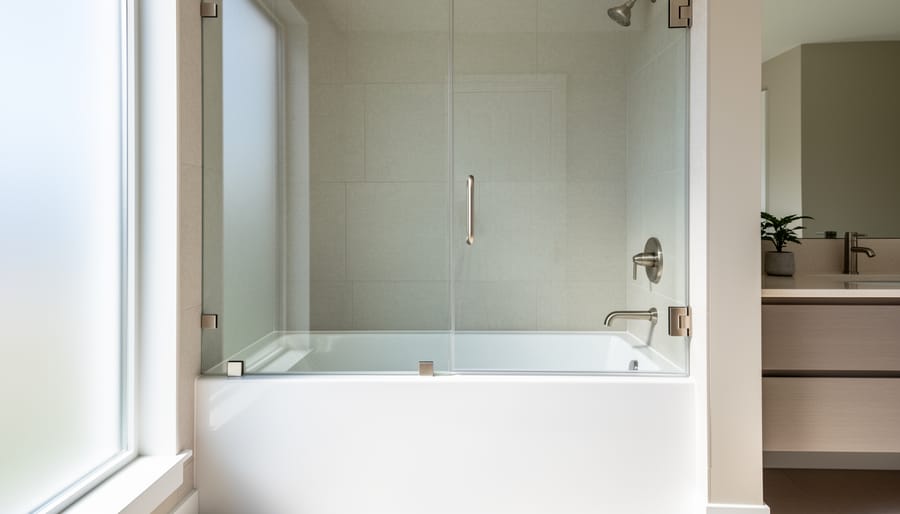
Think of a glass-door tub as a few simple parts working as a team. The tub holds the water, the glass keeps the splashes in, and a few small pieces, hinges, rollers, and a seal, make sure it opens smoothly and stays dry.
Here are the terms you’ll run into when you start shopping:
- Tempered glass
- Glass that’s been heat-treated to be much stronger than regular glass. If it ever breaks, it crumbles into small, blunt pieces instead of sharp shards.
- Fixed panel
- A sheet of glass that stays put and doesn’t open at all. You step over the tub edge and around it.
- Pivot hinge
- The hardware at the top and bottom edge of a door that lets it swing open like a regular door.
- Sliding track
- A metal rail along the top and bottom of the tub where small rollers glide, letting doors slide side to side.
- Bottom seal
- A flexible strip along the lower edge of the glass that closes the gap between the door and the tub.
- Threshold
- The raised edge or rim of the tub where the glass meets it, giving water a lip to stop against.
Each style opens a little differently. A fixed panel doesn’t move, so there’s nothing to open, which is why it’s simple, sturdy, and easy on the budget. A swing door pivots outward on its hinges, so you’ll need clear floor space in front of the tub. Sliding doors glide along the track, which makes them a good fit when the bathroom is tight and there’s no room for a door to swing.
So how does the water stay inside? Mostly it comes down to two details. Thicker tempered glass, often around a quarter to three-eighths of an inch, feels sturdier and holds its shape without wobbling or warping, which keeps edges lined up. And a good bottom seal closes the small gap where water likes to sneak out. If you ever notice puddles on the floor, a worn seal is the first thing to check. It’s usually a quick, inexpensive swap.
Styles to Choose From: Glass Door Types and Tub Shapes
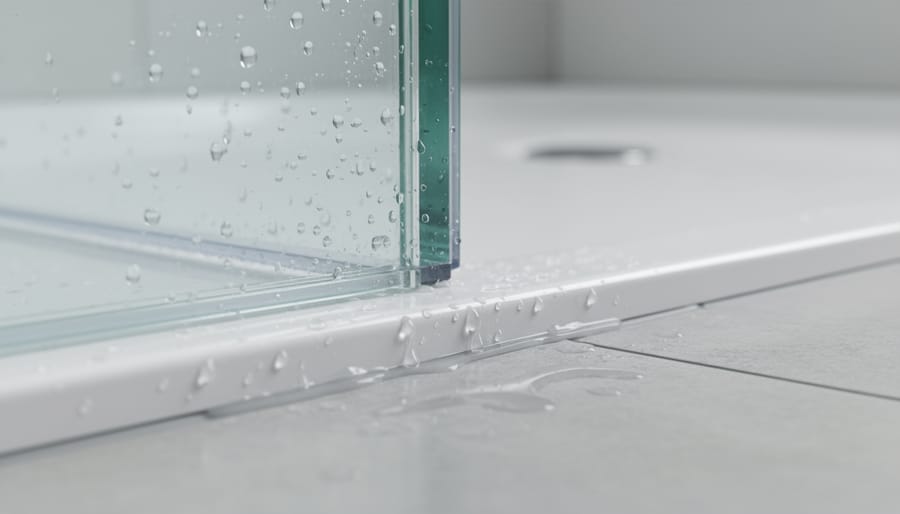
Panel, Hinged, and Sliding Glass Options
Glass comes in three main formats, and each one gives your tub a different personality.
A fixed panel is a single sheet of glass that stays put. There’s no door to open, so you simply step around it into the tub. It’s the cleanest, most open look you can get, and it works well in a minimalist bathroom or anywhere you want the room to feel airy. Because there are no hinges or tracks, it’s also the easiest to wipe down and usually the most budget-friendly. If you’re after a calm, spa-like vibe a simple fixed panel is a lovely place to start.
A hinged door swings outward on hinges, much like a cabinet door. It gives you a wide opening, which makes stepping in and out of a deeper or wider tub more comfortable. The catch is that it needs a little clear floor space to swing, so it suits bathrooms with a bit of breathing room.
Sliding doors glide along a track, so nothing swings into your space. That makes them a smart pick for tight bathrooms, narrow layouts, or doorways close to the tub. The tradeoff is a slightly smaller opening and a track that needs an occasional wipe.
Think about how you move through your bathroom, then choose the format that fits your routine.
Tub Shapes and Finishes That Pair Well with Glass
The tub you choose changes how a glass door looks and feels, so it helps to start with the shape.
A standard alcove tub, the three-walled kind most of us already have, pairs easily with a fixed panel or sliding door and keeps things simple. A freestanding tub with a glass screen feels more like a sculpture. The screen can sit just beside it, which keeps the bathroom open. Corner and walk-in styles tuck into tighter spots, and a built-in door can make them friendlier to use.
Next comes the frame and glass finish, where the mood really shifts. Here’s a quick way to match them:
- Frameless clear glass: clean, airy, and spa-like, a natural fit for a zen modern bathroom.
- Matte black frame with clear glass: bold and industrial, great for contrast against light tile.
- Brushed nickel frame: soft, classic, and easy to match with existing fixtures.
- Frosted glass: gentle privacy with a calm, diffused glow.
- Fluted glass: textured and a little retro, adding depth without blocking light.
- Tinted glass: moody and dramatic, best in larger, well-lit rooms.
There’s no wrong combination here. If you love the warmth of a classic look but crave a bit of edge, try a brushed nickel frame with fluted glass. Pick what feels like you, then let the rest of the room follow.
Where Glass-Door Tubs Shine: Everyday Uses and Real-Life Makeovers
Picture a small bathroom with a tub, a curtain on a rod, and a faint feeling that the room is closing in on you. That curtain splits the space in half and hides the prettiest part of the room. Swap it for a clear glass panel and the walls suddenly seem farther apart, because your eye travels all the way to the back of the tub.
A glass-door tub earns its place in a lot of everyday situations:
- Small bathrooms, where clear glass keeps sightlines open so the room feels bigger.
- Family homes, where one fixture handles bath time for kids and a quick shower for grown-ups.
- Rentals, where a tension-mounted or non-drilled screen can add polish without a permanent remodel (check your lease first).
- Accessibility-minded households, where a hinged door that swings out, or a walk-in style with a built-in door, can make getting in and out easier.
- Shared bathrooms, where a frosted or fluted finish adds privacy without blocking light.
Here’s a makeover story that plays out in homes everywhere. A couple inherited a bathroom with a yellowing curtain, a sagging rod, and a mildew problem that never stayed gone. They took down the whole arrangement and installed a simple fixed glass panel along the tub’s open edge. Nothing else changed, not even the tub. Suddenly the tile pattern they’d forgotten about was visible, and the room looked lighter and tidier. The takeaway is that a single, inexpensive swap can do more than a full renovation.
Another household had a different goal. With two young kids and a busy morning routine, they needed bath nights and five-minute showers from the same space. A hinged door gave them easy access for bathing little ones, while the glass kept water inside during fast rinses. It also meant no more soggy curtain clinging to everyone’s legs.
If you’re on the fence, think about who uses your bathroom and when. The best setup is the one that fits your routine, your space, and your comfort, not the one that looks best in a photo.
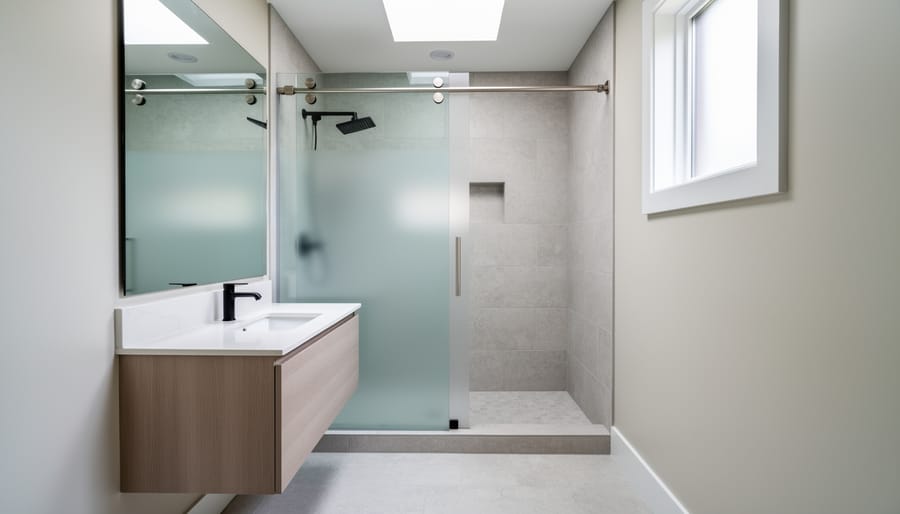
Making It Yours Without Overspending
You don’t need a full remodel to make a glass-door tub feel like yours. Start with the glass itself. A simple fixed panel costs less than a hinged or sliding door because there’s no hardware to buy, and it keeps the look clean and open. If you want privacy, pick a frosted or fluted texture instead of clear glass. You still get the light, just softened.
Next, think about what’s already there. A tired tub can look brand new with updated fixtures, like a fresh faucet or showerhead in matte black or brushed nickel. If the finish is scuffed, a paint-safe tub refinishing kit can bring it back without replacing anything. And if the walls need a little personality, browsing modern bathtub tile designs can spark ideas you can scale down, like tiling just one accent wall or the area behind the tub.
Then layer in the cozy stuff. Thick towels in colors you love, a small plant that likes humidity (ferns and pothos are happy there), and warm lighting from a dimmable sconce or a plug-in candle-style lamp can turn a plain tub into a little retreat. None of it is expensive, and all of it is easy to swap when your mood changes.
Finally, keep the glass sparkling with a quick squeegee after each shower. It takes about thirty seconds. Once a week, wipe it with a gentle cleaner or a mix of white vinegar and water, and skip anything harsh or gritty that could scratch.
Most of all, trust your own taste. If a choice makes you smile when you walk in, it’s the right one.
Your Questions About Glass-Door Tubs, Answered
Not sure where to start? These are the questions people ask most often, with plain answers.
Will a glass door work in a small bathroom?
Yes, and it often helps. A clear panel lets your eye travel straight through to the wall behind, so the room reads as bigger than it would with a curtain. If space is really tight, a sliding door avoids the swing-out clearance a hinged one needs.
How hard is it to keep the glass clean?
It’s easier than most people expect. A quick squeegee after each shower and a gentle glass cleaner now and then keep water spots from building up.
Can I still take a proper soak?
Absolutely. The tub works exactly as it always did, and you simply slide or swing the glass out of the way while you fill it and settle in. A fixed panel with a gap at one end makes getting in and out easy.
What should I measure before shopping?
Measure the tub’s length and the width of its rim, plus the height from the rim to where you want the glass to end. Note how much clearance you have if you’re considering a door that swings, and write everything down before you head to the store.
Should I pick clear or frosted glass?
Clear glass keeps things light and open, while frosted or fluted glass adds privacy and a softer, spa-like feel. Think about who shares the bathroom and how much seclusion you want.
Still on the fence? Spend ten minutes sketching how your bathroom works day to day. That little exercise usually points straight to the right choice.
A modern bathtub with a glass door isn’t a one-size-fits-all fixture. It’s a flexible starting point, and it sits comfortably within today’s Modern Bathtub Design Approaches because it can be shaped around the way you actually live. Maybe that means a clear fixed panel that makes a small room feel bigger. Maybe it’s a fluted glass door that adds a little privacy and a lot of personality.
So before you shop, picture your own routine. Do you want long, quiet soaks, or quick weekday showers before work? Who shares the space? Let those answers guide you toward the style that feels like you, not like a catalog page.
You also don’t have to do it all at once. Start with one small, affordable change, like swapping the curtain for a simple panel or adding a plant and softer lighting. Small steps add up, and your bathroom can become a place you truly enjoy walking into.